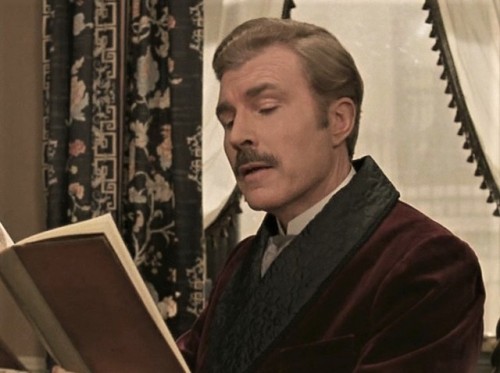
From my novel, REMARKABLE POWER OF STIMULUS.
CHAPTER 12
A SHADOW ON THE LAND
“There are my prisons,” he continued, pointing to a row of bottles and jars which stood upon a side table. “Among these gelatine cultivations some of the very worst offenders in the world are now doing time.” “The Adventure of the Dying Detective.”
For me, and for many, the winds had died and a thick, stagnant yellow-green fog hung over London once again. As if we had angered the great god Zeus to malevolence and he had snapped his fingers. An appalling change came over the city and one in which I would be gravely involved.
On Wednesday, I was called away from Baker Street, to face a far greater killer than I have ever faced and one Holmes was helpless before. It was a recurrence of epidemic proportions of Russian influenza in the city. This murderer knew no bounds, respected no class, had killed close on a million Europeans in ‘89 and ‘90 and returned each year to slay hundreds of thousands more. I joined with others in a valiant attempt to stay the scourge and the panic as the newspapers spread the worst possible scenarios.
Doctors and medical professionals answered the call to find a solution to this loathsome scourge. Not one of us was well-known. Well not as a doctor, anyway. We worked out of the London Homeopathic Hospital, which is famed for saving more lives than any other hospital during the ‘54 cholera epidemic. The death rate for those treated homoeopathically was 10% compared to 60% at other hospitals. They were successfully involved in clearing up the cause of the disease in the city. The adjacent Great Ormond Street Children’s Hospital we used for patient treatment.
We knew it was a bacterial infection, but had no cure. Yet, this knowledge did lead us to form strategies that proved to lessen the outbreak. Our independent medical coalition was intent on stopping the disease’s spread and recommended school closings, mandatory isolation of ill persons, and quarantine of those suspected of having contact. The bans on public gathering, the closure of taverns, entertainment venues, sporting events, and indoor gatherings did not win for us much applause. These we encouraged to be moved outdoors.
Thrown together with other professionals in an emergency situation, I made the acquaintance of many I would have otherwise never met. A friendship emerged from within this horror. I became associated with a gentleman from an exciting world I had only touched upon in my youth. Doctor James George Robertson of Ashwell added much to our efforts. His many years living as a sportsman made for our fast friendship. At the time, I had followed his career with great interest. He was noted as the first African to play professional rugby in England. He had played extremely well for the Scotch football league and to be working beside him was an honour. The humorous stories he told of his life in that sport brought us doctors through many a weary night and saved me from the narration of yet another story of Mr. Sherlock Holmes.
It fell to Robertson and myself to examine team sporting events as to our recommendations. Our first day we visited Fulham at Craven Cottage, the oldest club, and then Preston North End which had won the ‘89 Football Association Cup Final.
“My admiration for these teams is immense.”
He slapped me on the back.
“Ah, John you didn’t play long enough.”
“My war duty took me away from it. I’ve heard of men playing football before skirmishes. My experience was more the out of the frying pan and into the next fire variety.”
He laughed.
Here Doctor Robertson was a celebrity and easily garnered support from teammates and management in following our protocols. It was my hope this shared interest was one we would continue in better days.
With the clearing mistrals of spring the disease left us for other shores. Areas that had early enforced our approaches had the lowest death toll from this ghastly scourge, which could take a healthy man from infection to death in ten days’ time. I and my fellows were heartened to see the towns which had followed our suggestions coming back. And I am proud to say the practices we initiated and proved at this time were to save a great many lives down the years. I returned to Baker Street, exhausted and slept for two days, rising only for Mrs. Hudson’s insisted meals.
“Doctor, good hearty broth will keep your strength up, as will this delicious luncheon of chicken and Mr. Hudson’s tomatoes. He used to say they had the power to cure anything.”
“Thank you Mrs. Hudson, and might you inform me as to what day it is?”
 Features of Interest